close

Choose Your Shared Hosting Plan

Choose Your Reseller Hosting Plan

Choose Your VPS Hosting Plan

Choose Your Dedicated Hosting Plan

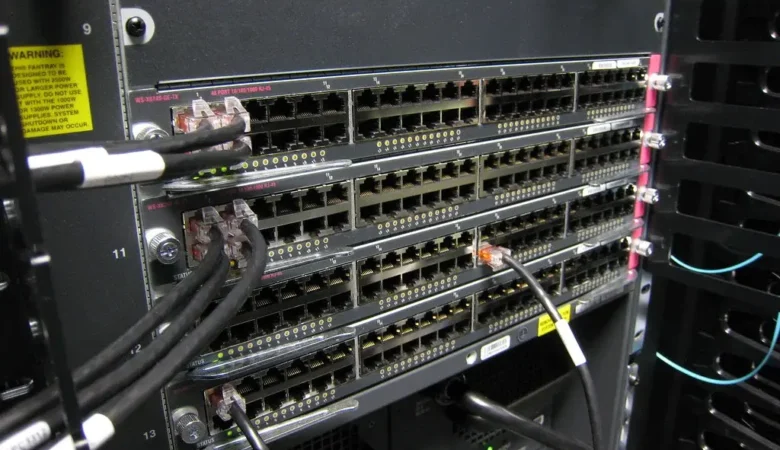
How to Choose 10GbE, 25GbE, or 100GbE for Hosting, Cloud, and AI Infrastructure

Executive Summary The fastest network is not always the right network. In hosting and infrastructure design, the correct port speed depends on traffic shape, storage architecture, virtualization density, backup behavior, and how much east-west traffic your environment generates. For simple web hosting and light application servers, 10GbE is often sufficient. For modern virtualized platforms, database […]


Burst-Tolerant Infrastructure Planning: How to Handle Traffic Spikes Without Paying for Idle Capacity

Executive Summary: Burst-tolerant infrastructure is the practice of absorbing sudden demand spikes without sizing every system for peak usage all month long. The most reliable designs combine delivery-layer shielding, elastic compute, buffered application flows, and a data layer that fails predictably under pressure. For hosting teams, the real goal is not just higher capacity; it […]

Designing a Failure-Tolerant Hosting Stack: Control, Data, and Recovery Planes

Concise answer: A failure-tolerant hosting stack is built so one broken component does not take the entire service offline. It separates management, traffic handling, storage, and recovery into distinct failure domains, then adds redundancy, monitoring, automation, and tested rollback paths so the platform can keep serving traffic during hardware, software, network, or power failures. Hosting […]

How to Place Each Workload in the Right Infrastructure Layer

Choosing a hosting environment by product label alone often leads to performance bottlenecks, unnecessary spend, and avoidable compliance risk. A stronger approach is to match each workload to the infrastructure layer that fits its latency, compute, storage, control, and networking requirements. Executive Summary Answer: The best hosting choice is not the most powerful platform; it […]

Latency Architecture for Hosting: Designing Infrastructure That Stays Fast Under Real-World Load

Executive summary: Latency architecture is the practice of designing hosting, networking, storage, and compute layers so systems stay fast not only on average, but under real traffic, real geography, and real failure conditions. If your business depends on responsive websites, APIs, AI inference, transactional databases, or remote access, the difference between a good platform and […]

Failure-Domain-First Hosting: How to Choose VPS, Dedicated, Colocation, Cloud, and GPU Infrastructure

Executive summary. The best hosting decision is rarely the one with the biggest specs or the lowest monthly price. It is the one that matches your workload to the right failure domain, control plane, and network design. When you evaluate VPS, dedicated servers, colocation, cloud, and GPU infrastructure through that lens, you can reduce downtime […]

The Workload Placement Playbook: Choosing Between VPS, Dedicated Servers, Colocation, Cloud, and GPU Infrastructure

Executive Summary: The most profitable hosting decisions are rarely about finding the cheapest server or the biggest cloud plan. They are about placing each workload in the environment that matches its latency profile, compliance requirements, traffic pattern, hardware needs, and operational maturity. A customer portal, a transactional database, a video pipeline, and an AI inference […]

Latency-Aware Hosting Architecture: Choosing the Right Mix of VPS, Dedicated, Colocation, and Edge Infrastructure

Executive Summary: Latency-aware hosting architecture is the practice of placing each workload in the infrastructure tier that best balances response time, control, compliance, resilience, and cost. Instead of asking which hosting option is best in general, the smarter question is where each part of the application should live. For many businesses, the answer is a […]

INS-CO
Privacy Overview

This website uses cookies so that we can provide you with the best user experience possible. Cookie information is stored in your browser and performs functions such as recognising you when you return to our website and helping our team to understand which sections of the website you find most interesting and useful.