


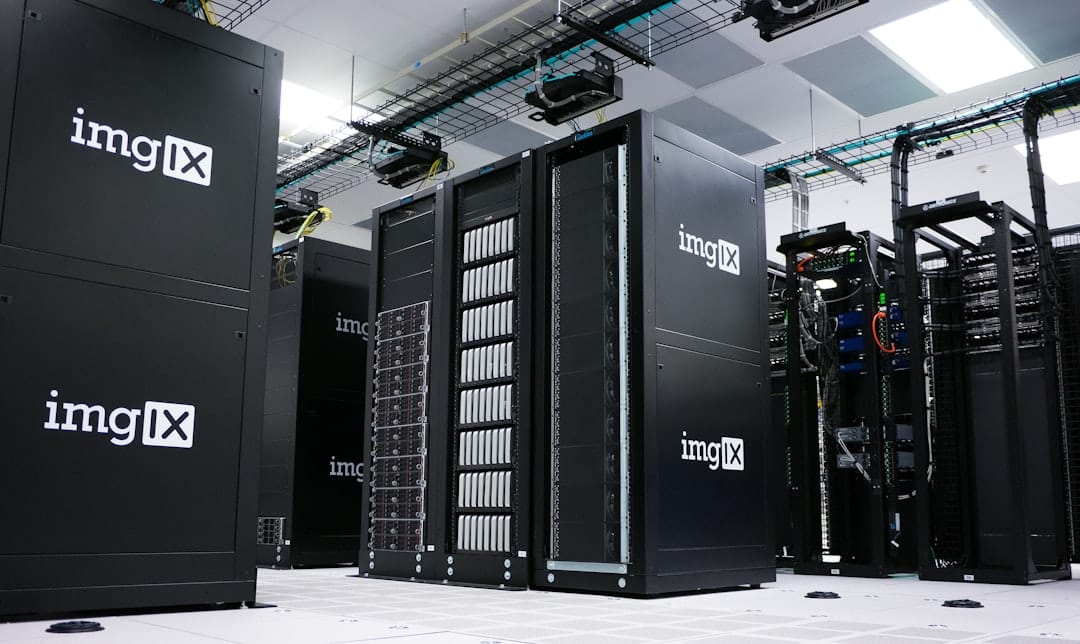
AI Data Centers Force a Network and Power Reset
Hyperscalers, colocation operators and enterprise IT teams from Northern Virginia to Singapore are accelerating AI-ready data center builds in 2025 as generative AI workloads strain power, cooling and networking limits. The race is changing how cloud capacity is bought, built and secured, with utilities, equipment vendors and regulators all being pulled into the same planning cycle.
Why the shift is happening now
The shift began as a chip story, but it has become an infrastructure story. Training and serving large language models demands far more power density than traditional enterprise applications, forcing operators to redesign racks, switchgear, cabling and cooling in one sweep.
The International Energy Agency said last year that electricity demand from data centers, AI and crypto could roughly double by 2026 from 2022 levels. That forecast has become a shorthand for the pressure now visible across campuses in the United States, Europe and Asia.
That matters because real estate, power and permitting are now as strategic as GPUs. In many regions, the limiting factor is no longer budget alone, but the ability to secure megawatts, fiber routes and water or liquid cooling capacity in time to meet demand.
Power and networking are becoming the bottlenecks
Operators say the first constraint is no longer server procurement but available power and interconnects. Uptime Institute has repeatedly found that power remains a leading cause of serious outages, a reminder that redundancy, backup generation and battery design have become board-level concerns.
Networking is the second choke point. Dell’Oro Group has pointed to rising demand for 800G Ethernet and optical gear as AI clusters generate heavy east-west traffic, a pattern that pushes traditional enterprise fabrics past their comfort zone.
That is creating a fast-moving market for high-density switches, optical transceivers and liquid cooling systems. Vendors from GPU suppliers to rack-scale integrators are competing to prove they can deliver not just performance, but deployability inside constrained power envelopes.
Colocation providers are responding with modular AI halls and liquid-cooled rows aimed at firms that cannot build their own campuses. For enterprises, the appeal is speed: renting AI capacity can be faster than waiting for a greenfield site, utility approval and a long procurement cycle.
Security is moving closer to the infrastructure layer
Security is being folded into infrastructure planning earlier than in past cloud cycles. More AI systems means more data pipelines, more privileged access and more exposure across model training, inference APIs and backup repositories.
IBM’s 2024 Cost of a Data Breach report put the average incident at $4.88 million, a figure that keeps zero trust, segmentation and identity controls high on the priority list. Security teams are also watching for supply chain risk in firmware, management interfaces and third-party orchestration layers.
For cloud providers, that means stronger tenant isolation, encrypted storage and monitoring around GPU clusters. For customers, it means assuming that AI workloads inherit both the opportunity and the attack surface of the modern hybrid cloud.
Innovation and trend angle
The most visible innovation is in cooling. Direct-to-chip liquid cooling and rear-door heat exchangers are moving from pilot projects to standard options in new AI halls, while some operators are experimenting with immersion cooling for ultra-dense deployments.
Another trend is the spread of edge AI. Telecom carriers and industrial operators want inference closer to users and machines, which is pushing compute into smaller regional facilities and edge nodes connected by faster fiber and 5G transport.
In crypto and blockchain infrastructure, the same pressure is driving a more practical conversation about efficiency and compute reuse. Some former mining sites are being evaluated for AI hosting because they already have power, fiber and large footprints, though retrofit economics remain mixed.
These shifts point toward a more distributed infrastructure model, where cloud, telecom and enterprise assets blend into a single compute fabric. If that model matures, the winners will be operators that can standardize cooling, automate provisioning and keep latency low without sacrificing resilience.
What it means for enterprises, investors and cloud providers
For enterprises, the message is that AI adoption now depends as much on infrastructure planning as on model selection. Budgeting for GPUs without reserving power, network capacity and security controls is increasingly a recipe for delay.
IT teams will need closer coordination with facilities, procurement and finance, especially as rack densities climb and refresh cycles shorten. Network engineers should expect more 400G and 800G planning, tighter latency targets and more attention to optical supply chains.
Investors are likely to keep favoring firms that can monetize the AI buildout across energy, cooling, networking and security layers, not just the headline chip makers. The broader tech market will also watch whether utilities can support the next wave of demand without slowing permitting or raising costs.
What to watch next is whether 2026 becomes the year AI infrastructure shifts from bespoke megaprojects to repeatable industrial systems. If power availability, cooling innovation and network upgrades stay in sync, the winners will be the companies that can turn scarcity into scale; if not, delays and higher costs will remain the defining story of the AI boom.