


AI Infrastructure Push Shifts from GPUs to Power, Networking, and Security
This week, cloud operators, AI chip vendors, and data center builders across the United States, Europe, and Asia are converging on the same problem: the next phase of artificial intelligence depends less on model announcements and more on whether the industry can supply enough power, cooling, networking, and memory to run inference at scale. The shift matters because enterprises are moving from pilot projects to production deployments, and that is forcing hyperscalers, colocation providers, and infrastructure vendors to redesign the stack around efficiency, latency, and security.
From model races to infrastructure economics
The AI story is no longer only about who can train the largest model. Over the past year, the market has shifted toward inference, agentic workflows, and enterprise deployments that must operate continuously, predictably, and at a cost IT leaders can justify. That change has elevated topics once considered back-end plumbing, including GPU utilization, memory bandwidth, high-speed networking, and power density.
In practice, this means buyers are asking different questions. Instead of focusing only on raw accelerator performance, CIOs and cloud architects are comparing total cost per token, system availability, deployment flexibility, and the operational burden of keeping large clusters cool and secure. Vendors are responding with denser racks, liquid cooling, tighter software orchestration, and more aggressive efforts to squeeze better performance from each watt.
What is changing inside the stack
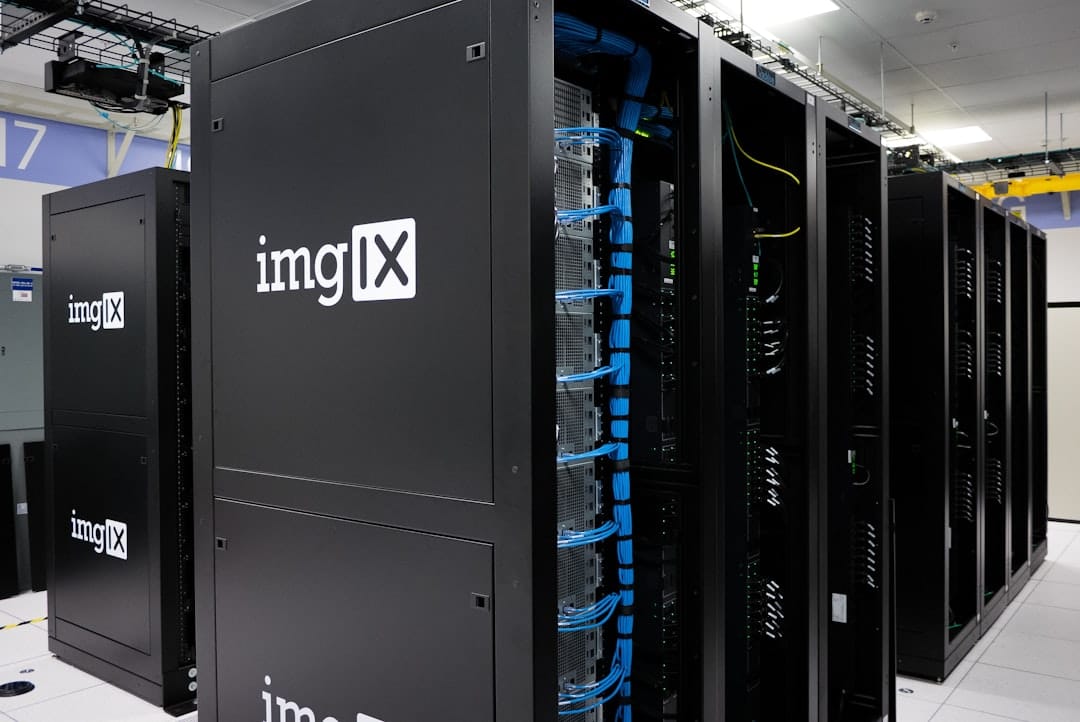
The technical conversation has moved quickly from chip specifications to systems design. Data center operators are evaluating direct-to-chip liquid cooling, rear-door heat exchangers, and new facility layouts built for much higher rack densities. Networking is also becoming a major differentiator as AI clusters depend on low-latency east-west traffic, pushing demand for faster Ethernet, better optical interconnects, and tighter integration between network and scheduler software.
Storage and memory are part of the same equation. Enterprises that once thought primarily about GPU count are now examining how quickly data can be staged, cached, and fed into inference systems. That is especially important for retrieval-augmented generation, AI assistants that need access to internal knowledge bases, and industrial workloads that cannot tolerate long response times. The result is a broader infrastructure upgrade cycle that touches servers, switches, storage arrays, identity systems, and observability platforms.
Market reaction and competitive pressure
Markets have continued to reward companies positioned closest to the AI infrastructure buildout, from accelerator makers to networking vendors, power and cooling specialists, and software firms that help customers manage GPU fleets. At the same time, the competitive landscape is becoming more complex. Nvidia remains the reference point for most large-scale deployments, but AMD, Intel, custom silicon efforts from hyperscalers, and a growing set of AI-specific startups are all pressing for share.
Cloud providers are also adjusting their playbooks. The dominant public clouds are still expanding capacity, but they are increasingly packaging AI services around managed infrastructure, model hosting, and security controls rather than simple compute access. That bundling strategy matters because it can lock customers into a broader ecosystem while also reducing the operational friction that has slowed some enterprise rollouts. For infrastructure vendors, the opportunity is clear, but so is the pressure to differentiate on efficiency and supply chain reliability.
Security and governance are becoming central
As organizations move AI from experimentation to production, the security perimeter is widening. AI agents often need access to internal applications, documents, and APIs, which increases the risk of over-permissioned service accounts, data leakage, and prompt injection attacks. Security teams are being asked to treat AI workloads like any other critical enterprise system, with strong identity controls, audit logging, segmentation, and policy enforcement.
That is changing the buying process. Enterprises now expect model gateways, secrets management, and data classification tools to integrate with AI platforms from the outset. BleepingComputer, Dark Reading, and other security-focused outlets have repeatedly highlighted how quickly AI can expand the attack surface if governance is added only after deployment. For CISOs, the question is not whether to use AI, but how to prevent that adoption from creating a new category of unmanaged risk.
Why startups and vendors are moving fast
The current environment is creating room for startups that can help enterprises use less compute, control costs, and deploy models more efficiently across hybrid environments. Some are focusing on orchestration and observability, others on model routing, vector databases, or workflow automation. Venture investors are still selective, but infrastructure-adjacent software remains attractive because it can solve immediate operational pain without requiring customers to rip out existing systems.
Established vendors are also under pressure to modernize. Network equipment providers, storage companies, virtualization platforms, and managed service firms are repositioning around AI readiness. That includes support for high-density environments, better telemetry, and tooling that can help enterprises understand whether their AI investments are actually delivering productivity gains. For many vendors, the winning message is no longer raw performance alone, but measurable operational simplicity.
What to watch next
The next few months are likely to bring more emphasis on inference optimization, power availability, and cloud portability. Expect continued interest in smaller specialized models, hybrid deployments that keep sensitive data inside private environments, and more software designed to route workloads to the most efficient accelerator available. Data center expansion will remain constrained by energy, permits, and supply chain timing, which could favor regions with abundant power and faster build cycles.
The biggest risk is that AI adoption advances faster than the supporting infrastructure can be financed, built, and secured. If that happens, enterprises may face higher prices, longer wait times for capacity, and more complex vendor dependencies. But the broader direction is clear: over the next year, AI competition will be decided not only by model quality, but by the ability to deliver scalable, secure, and energy-aware infrastructure that can sustain real business usage.

