


AI Infrastructure Spending Accelerates as Enterprises Move Beyond Pilots
Hyperscalers, chipmakers, and enterprise IT teams are intensifying their push to expand AI infrastructure this week across North America, Europe, and Asia as generative AI moves from experimentation into production workloads. The shift matters because the bottlenecks are no longer just model quality or software integration; they are now power, cooling, networking, GPU supply, and security controls, all of which are shaping how quickly companies can scale AI in the real world.
Recent reporting across major technology and business outlets has highlighted the same underlying story from different angles: demand for accelerated computing remains strong, cloud providers continue to add capacity, and enterprises are under pressure to turn AI pilots into measurable business outcomes. That combination has made AI infrastructure one of the most closely watched themes in technology markets, with implications for cloud margins, data center design, semiconductor demand, and enterprise procurement cycles.
The new center of gravity in tech spending
For much of the past two years, the AI conversation was dominated by foundation models and chat-style interfaces. The center of gravity has now shifted to infrastructure. CIOs and CTOs are asking a more practical question: where will the compute come from, how much will it cost, and how quickly can it be deployed without creating operational risk?
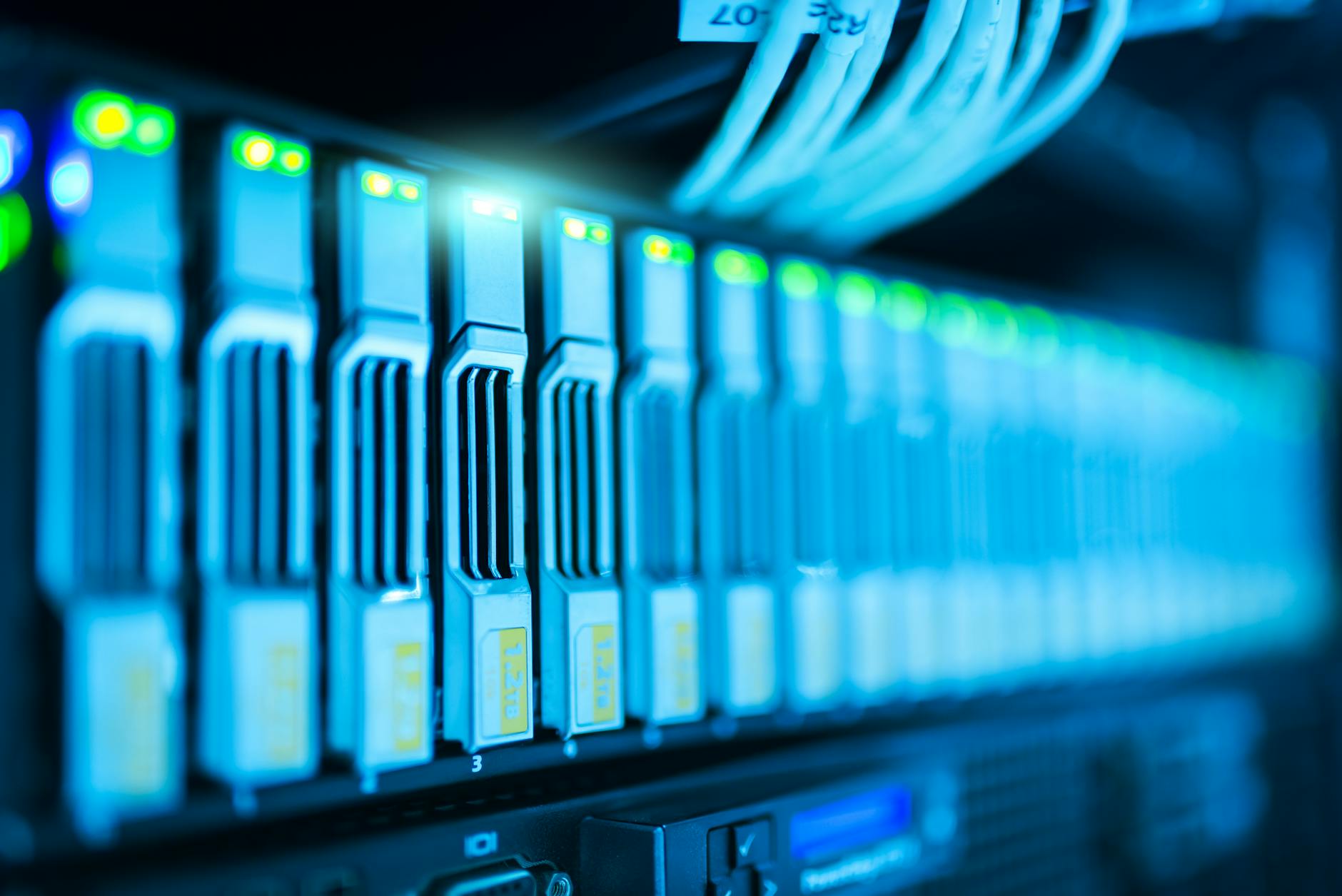
That question is driving a broader reordering of the technology stack. GPU clusters, high-bandwidth memory, fast interconnects, storage tiers optimized for training and retrieval, and low-latency cloud networking are becoming strategic assets rather than back-office utilities. Vendors across the ecosystem are adapting their product roadmaps to fit this demand, from hyperscale cloud platforms to networking suppliers and data center operators.
Industry background matters here. The current AI wave did not begin with enterprise adoption; it began with rapid model advances and a rush for compute capacity. What is different now is the pace at which enterprise buyers are trying to industrialize AI. Instead of isolated experiments, they want repeatable deployments for customer support, software development, search, document processing, and analytics. That transition puts infrastructure at the heart of procurement and architecture decisions.
Compute scarcity, power constraints, and the data center race
AI infrastructure is still constrained by the physical realities of data centers. High-density GPU racks consume far more power than traditional enterprise servers, and that has pushed operators to rethink cooling systems, rack design, floor layouts, and power delivery. Liquid cooling, advanced airflow management, and closer coordination with utilities are becoming standard discussion points rather than niche engineering topics.
This is also why data center development has become such a major story in its own right. Operators are racing to secure land, permits, grid connections, and long-term energy supply. In markets with limited power availability, the ability to bring new AI-ready capacity online can be more important than the nominal number of servers purchased. For cloud providers, the challenge is not simply buying more accelerators; it is ensuring the entire facility can support them at scale.
The semiconductor ecosystem remains central to the story. NVIDIA continues to anchor much of the current accelerator market, while AMD and custom silicon efforts from cloud vendors are keeping pressure on the competitive landscape. The result is a market where demand is broad but supply is still uneven, which has encouraged long lead times, capacity reservations, and closer partnerships between cloud buyers and hardware vendors.
Enterprise adoption is moving from hype to workflow redesign
In enterprise IT, the most important trend is not the launch of another chatbot. It is the gradual redesign of workflows around AI-assisted operations. Software teams are using code-generation tools to accelerate development, support teams are deploying retrieval-based assistants, and data teams are embedding AI into search, summarization, and knowledge management systems.
That shift is changing how organizations evaluate vendors. Buyers are increasingly looking for platforms that can integrate with identity systems, logging pipelines, policy engines, and data governance frameworks. A standalone AI tool may attract attention, but a platform that can be monitored, audited, and controlled inside existing enterprise environments is more likely to survive procurement review.
The market reaction has followed that pattern. Investors continue to reward companies tied to AI infrastructure, while software vendors are being judged on whether AI features actually improve retention, productivity, or revenue. In practice, this is pushing the market away from broad claims and toward clearer enterprise metrics such as throughput, cost per task, deployment time, and compliance readiness.
Security, governance, and vendor risk are rising in importance
As AI systems become embedded in business processes, security teams are taking on a larger role. The risks are not limited to model misuse. Enterprises also have to manage prompt injection, data leakage, identity abuse, insecure integrations, and the possibility that sensitive information will be exposed through poorly governed retrieval systems or third-party plugins.
This is where cybersecurity and AI infrastructure increasingly overlap. Zero trust architecture, secrets management, audit logging, and data classification are becoming mandatory elements of AI deployment planning. Security teams are no longer reviewing AI after the fact; they are being asked to help define the architecture before rollout begins.
For vendors, that creates both an opportunity and a test. Cloud providers, cybersecurity firms, and enterprise software companies are all pitching AI-native features, but the buyers are more cautious than the marketing suggests. Enterprises want assurances around data residency, model isolation, tenant separation, and incident response. The companies that can demonstrate operational maturity are likely to gain an edge as AI moves deeper into regulated industries.
What comes next for cloud, networking, and enterprise IT
The next phase of the AI boom is likely to be less about headline model launches and more about infrastructure modernization. Expect continued investment in AI-optimized cloud regions, more efficient networking fabrics, stronger storage pipelines for retrieval workloads, and greater use of automation to manage resource allocation across hybrid environments.
Network architects will also face new demands. AI traffic patterns are different from traditional enterprise workloads, especially when clusters need sustained east-west communication between accelerators. That is pushing interest in faster Ethernet, high-performance switching, and software-defined networking approaches that can keep latency low and utilization high.
Over the coming months, several risks will shape the market. Power availability could slow data center expansion. Hardware supply constraints could delay deployments. Enterprises may also discover that AI projects require more governance and integration work than early pilots suggested. At the same time, startups building tooling for observability, inference optimization, model routing, and AI security could benefit as buyers look for ways to control cost and complexity.
For now, the direction of travel is clear: AI is no longer just a software story. It is a systems story, a facilities story, and an infrastructure story. The companies that can combine compute, networking, security, and operational discipline are likely to set the pace as the industry moves from experimentation to scaled deployment.

