


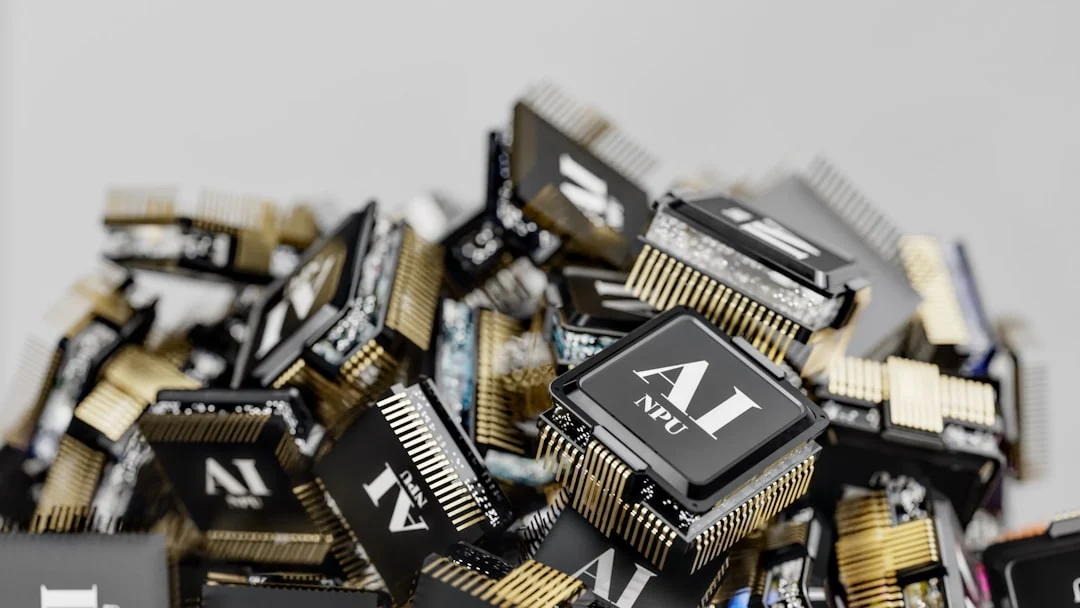
AI Hedge Fund Situational Awareness Pumps $400M Into Chip Startup, Signaling Shift Toward Custom Silicon
A major investment by an AI hedge fund in a chip startup signals a pivotal shift towards custom silicon and the future of AI hardware.
AI-focused hedge fund Situational Awareness has reportedly committed $400 million to a chip startup, underscoring how institutional capital is increasingly flowing into semiconductor bets aimed at accelerating the next wave of AI hardware.
Meta Description
Situational Awareness invests $400M in a chip startup, highlighting a market shift as hedge funds and big capital target AI hardware and custom silicon.
News Summary
While hedge funds traditionally thrive on liquid markets, this reported $400M move reflects a broader shift: many investors now want exposure to the companies building the compute foundation for AI—especially startups pursuing specialized chips rather than relying solely on off-the-shelf processors.
Key Details
- Investor: AI-focused hedge fund Situational Awareness
- Reported investment size: $400 million
- Target: a chip startup aligned with the AI hardware opportunity
- Implication: capital is moving beyond software into the infrastructure layer—compute, accelerators, and specialized silicon
Industry Context
The semiconductor landscape is being reshaped by AI’s escalating compute needs. Large cloud providers and big tech firms are already accelerating demand for specialized accelerators, but the competitive frontier increasingly includes startups developing custom architectures, efficiency-first designs, and platform-level performance improvements that can outperform generic hardware for specific workloads.
At the same time, the funding ecosystem is evolving. As AI adoption spreads from training into inference—across data centers and eventually at the edge—investors are seeking more direct exposure to the supply chain of AI compute. The result is that sophisticated financial players, including hedge funds, are taking positions in early-stage chip companies to potentially capture upside as products scale.
Why this Matters for the Tech Ecosystem
This reported $400M bet signals that the competition for AI advantage is not only happening in model training and cloud distribution—it’s also intensifying in hardware innovation. If more capital follows hedge funds into semiconductor startups, it could:
- Increase funding velocity for new accelerator designs and related technologies
- Strengthen competition against established chip players by backing faster innovation cycles
- Accelerate commercialization, especially for chips tailored to performance-per-watt and real-world AI workloads
- Broaden the investment playbook for the sector, blending traditional finance with venture-like risk exposure
In short, Situational Awareness’s reported investment reflects a broader market shift: AI’s next phase is increasingly tied to who can deliver efficient, scalable compute—and who can fund that race.
Frequently Asked Questions
Por qué un hedge fund está invirtiendo 400 millones en una startup de chips en lugar de quedarse en mercados líquidos?
Porque la tesis ya no es solo “software e inversiones tradicionales”. El artículo sugiere que los inversores buscan exposición directa a la infraestructura del cómputo para IA. A medida que el hardware especializado gana peso (aceleradores y silicio a medida), el potencial de retorno puede estar en la cadena de suministro, aunque el perfil sea menos “líquido” y más parecido a venture.
Qué significa “custom silicon” y en qué se diferencia de usar procesadores genéricos?
Custom silicon implica diseñar chips con arquitecturas y optimizaciones pensadas para cargas de IA específicas. En contraste con el hardware genérico, estos diseños buscan mejorar eficiencia y rendimiento para tareas concretas. El artículo enfatiza que los avances pueden venir de nuevas arquitecturas, eficiencia por vatio y mejoras “a nivel plataforma”, no solo de comprar aceleradores existentes.
Cómo impacta la métrica de performance-per-watt en la decisión de invertir en chips para IA?
Performance-per-watt se vuelve central porque los sistemas de IA consumen mucha energía y la escalabilidad en centros de datos depende de costos y refrigeración. El artículo indica que los inversores priorizan chips “tailored” para workloads reales, donde la eficiencia sostiene el despliegue masivo. Mejor rendimiento por watt puede traducirse en menores costos operativos y mayor adopción.
El movimiento hacia chips personalizados aplica solo al entrenamiento, o también a la inferencia y el edge?
No se limita al entrenamiento. El contexto del artículo menciona que la adopción de IA se está expandiendo desde entrenamiento hacia inferencia, primero en data centers y luego en el edge. Esa transición cambia prioridades: se demandan chips eficientes para ejecutar modelos con latencia y costos más estrictos. Ahí es donde la personalización de hardware puede tener ventaja.
Cuáles son los principales riesgos para una estrategia de inversión de este tipo en startups de semiconductores?
El riesgo típico es tecnológico y de comercialización: diseñar y llevar un chip a producción requiere ciclos largos, validación de rendimiento y costos significativos. Además, el mercado puede moverse hacia arquitecturas o ecosistemas distintos. Aunque el artículo resalta potencial de upside, el enfoque también introduce una exposición “venture-like” a fallos de producto, adopción lenta y competencia de incumbentes.