


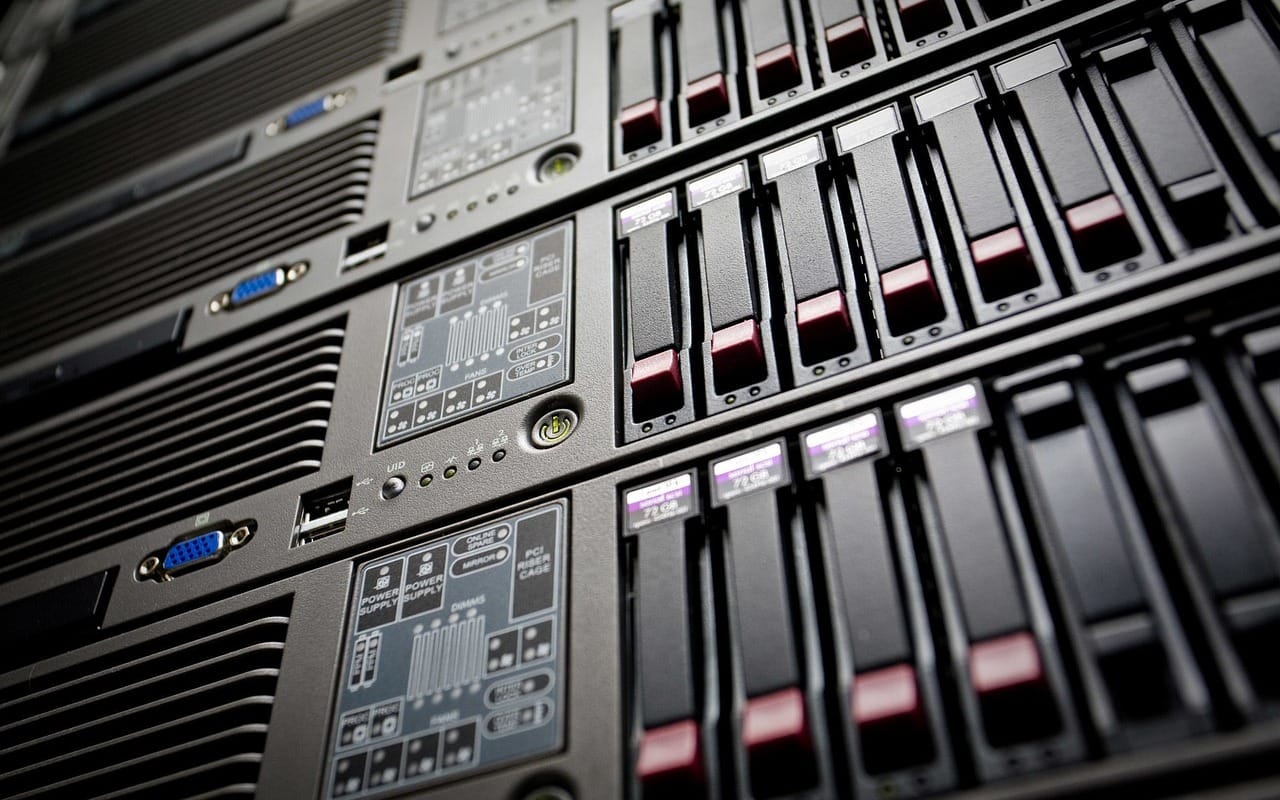
AI Infrastructure Boom Pushes Data Centers, Networks and Security Teams to Rebuild at Speed
Cloud operators, colocation firms and chipmakers are accelerating a fresh round of AI infrastructure upgrades this year as demand for generative AI shifts the industry’s bottleneck from software to power, cooling and network capacity. Across North America, Europe and Asia, data center teams are racing to add high-density racks, liquid cooling, faster switches and tighter security controls because conventional facilities were never designed for the electrical and thermal load of modern AI training and inference.
Why the shift matters now
The push comes after two years of rapid enterprise experimentation with large language models, copilots and automated analytics. In its surveys, Uptime Institute has repeatedly identified power, cooling and supply chain constraints as the most persistent operational issues in data centers, while the International Energy Agency has warned that electricity demand from data centers, AI and related digital services is climbing fast enough to influence grid planning.
That combination has made infrastructure a board-level topic. For cloud providers and enterprise IT leaders, the question is no longer whether to adopt AI, but where the compute can run reliably, securely and at a cost that can scale.
Inside the buildout
Operators are responding with more than just additional racks. Direct-to-chip liquid cooling, rear-door heat exchangers and other high-density thermal systems are moving from niche deployments into mainstream planning as facilities prepare for AI accelerators that draw far more power per rack than traditional server workloads.
Vendors including Schneider Electric, Vertiv and Supermicro have all leaned into the same message: the next wave of data centers must be engineered for density, not just square footage. That is changing real estate decisions as well, with hyperscalers and large enterprises favoring campuses that can secure long-term utility capacity, fiber access and enough space for phased expansion.
Industry analysts at Dell’Oro Group and CBRE have pointed out that available megawatts are becoming more important than available floor area, especially in markets where power queues and permitting delays can stretch for years. As a result, regions with reliable energy, cooler climates and favorable grid connections are gaining leverage in the competition for AI investment.
Networking is being rebuilt for machine-scale traffic
The network layer is also under pressure. AI clusters generate heavy east-west traffic as GPUs exchange model weights, gradients and checkpoints, which means bottlenecks can appear long before a data center runs out of servers. To keep those clusters moving, cloud providers and enterprises are upgrading to 400G and 800G Ethernet, expanding optical transport capacity and redesigning leaf-spine fabrics for lower latency and better congestion control.
InfiniBand remains important in some high-performance AI environments, but Ethernet vendors are pushing hard to close the gap as organizations look for broader interoperability and simpler operations. At the same time, technologies such as CXL are drawing attention for memory pooling and more flexible resource sharing, especially as AI workloads become more diverse and less predictable.
For network engineers, the main challenge is no longer just throughput. Observability, traffic shaping and workload placement are becoming critical, because even well-funded AI deployments can stall if storage, interconnects and orchestration layers are not tuned as a single system.
Security and operations are catching up
The security impact is equally significant. More AI services mean more APIs, more third-party tools and more opportunities for misconfiguration, especially in Kubernetes environments and cloud platforms that are being scaled quickly under pressure from business teams. Security firms and incident responders have warned that many organizations are deploying AI faster than they are updating identity controls, logging policies and model governance.
That creates new risks around exposed inference endpoints, data leakage, unauthorized model access and supply-chain weaknesses in the software used to manage AI infrastructure. For defenders, the growth of AI systems is forcing a tighter link between cybersecurity, infrastructure operations and application governance.
What the trend means for the next phase of tech spending
The current wave of investment is also changing how enterprises budget. AI now carries a full infrastructure bill: compute, electricity, cooling, networking, storage, compliance and the personnel needed to operate it. That is pushing many IT leaders to compare public cloud, colocation, private data centers and edge deployments more carefully rather than assuming one model fits every workload.
Innovation is likely to accelerate in response. Expect more AI-driven building management systems that optimize thermal performance, more modular data center designs that can be deployed faster, and more edge computing projects that place inference closer to factories, retail sites and telecom networks. Telecom operators, in particular, are positioning edge infrastructure as a way to support low-latency AI, industrial IoT and private 5G services.
For investors, the opportunity extends beyond chipmakers to utilities, fiber operators, cooling specialists and infrastructure software vendors. The risks, however, are just as clear: grid delays, hardware shortages, cyber incidents and cooling failures could all slow the pace of expansion. What to watch next is whether utilities, regulators and cloud providers can coordinate fast enough to turn today’s AI demand into durable, resilient capacity rather than another cycle of overpromised infrastructure.
Frequently Asked Questions
Why are available megawatts becoming more important than available floor space for AI data centers?
Because AI infrastructure is limited less by how many servers fit in a building and more by whether the site can supply enough power to run them continuously. A facility may have plenty of room, but without utility capacity, grid access and cooling headroom, it cannot host dense AI clusters at scale.
Why can’t older data centers simply add more servers to support generative AI?
Most legacy facilities were designed for lower rack densities and much smaller thermal loads. AI accelerators consume far more power per rack and generate more heat than traditional enterprise workloads, so older buildings often hit limits in power delivery, cooling, and airflow before they run out of physical space.
What makes liquid cooling and rear-door heat exchangers so important for AI workloads?
AI systems create concentrated heat that air cooling struggles to remove efficiently at high densities. Direct-to-chip liquid cooling and rear-door heat exchangers move heat away closer to the source, allowing racks to run at higher power levels more reliably and reducing the risk of thermal throttling or downtime.
Is InfiniBand still necessary for AI clusters if Ethernet is improving?
Not always. InfiniBand remains strong in some high-performance environments, especially where ultra-low latency is critical, but advanced Ethernet is catching up for many deployments. The choice increasingly depends on operational simplicity, interoperability, and whether the organization values a broader standard network stack over specialized performance.
Why does AI deployment create new security risks beyond ordinary cloud expansion?
AI rollouts often add APIs, orchestration tools, third-party components and faster-moving Kubernetes environments, which increases the chance of misconfiguration. Organizations may also expand identity, logging and access policies too slowly relative to deployment speed, leaving more exposed services and weaker visibility into how AI systems are being used.