


AI Data Centers Push Cloud, Network and Security Teams Into a New Buildout Cycle
Hyperscale cloud providers, colocation operators and enterprise IT buyers are accelerating AI data center projects in the US, Europe and Asia this year as demand for model training and inference strains existing power, cooling and networking capacity. The push, visible in new construction plans and equipment orders across the sector, is reshaping how cloud computing, telecom edge sites and cybersecurity teams prepare for the next wave of AI workloads.
Why the AI infrastructure race matters now
For much of the last decade, data center planning centered on virtualization, storage efficiency and broad cloud elasticity. Generative AI has changed that equation by concentrating demand into dense GPU clusters that consume far more power, generate more heat and move data at far higher rates between servers.
Industry trackers say the spending cycle is no longer limited to server upgrades. Synergy Research Group has described hyperscale capital expenditure as staying elevated, while Dell’Oro Group has pointed to strong demand for high-speed Ethernet and InfiniBand gear as operators build AI back-end networks. The result is a market where power availability, fiber routes and switch capacity can be as important as raw compute.
How operators are responding
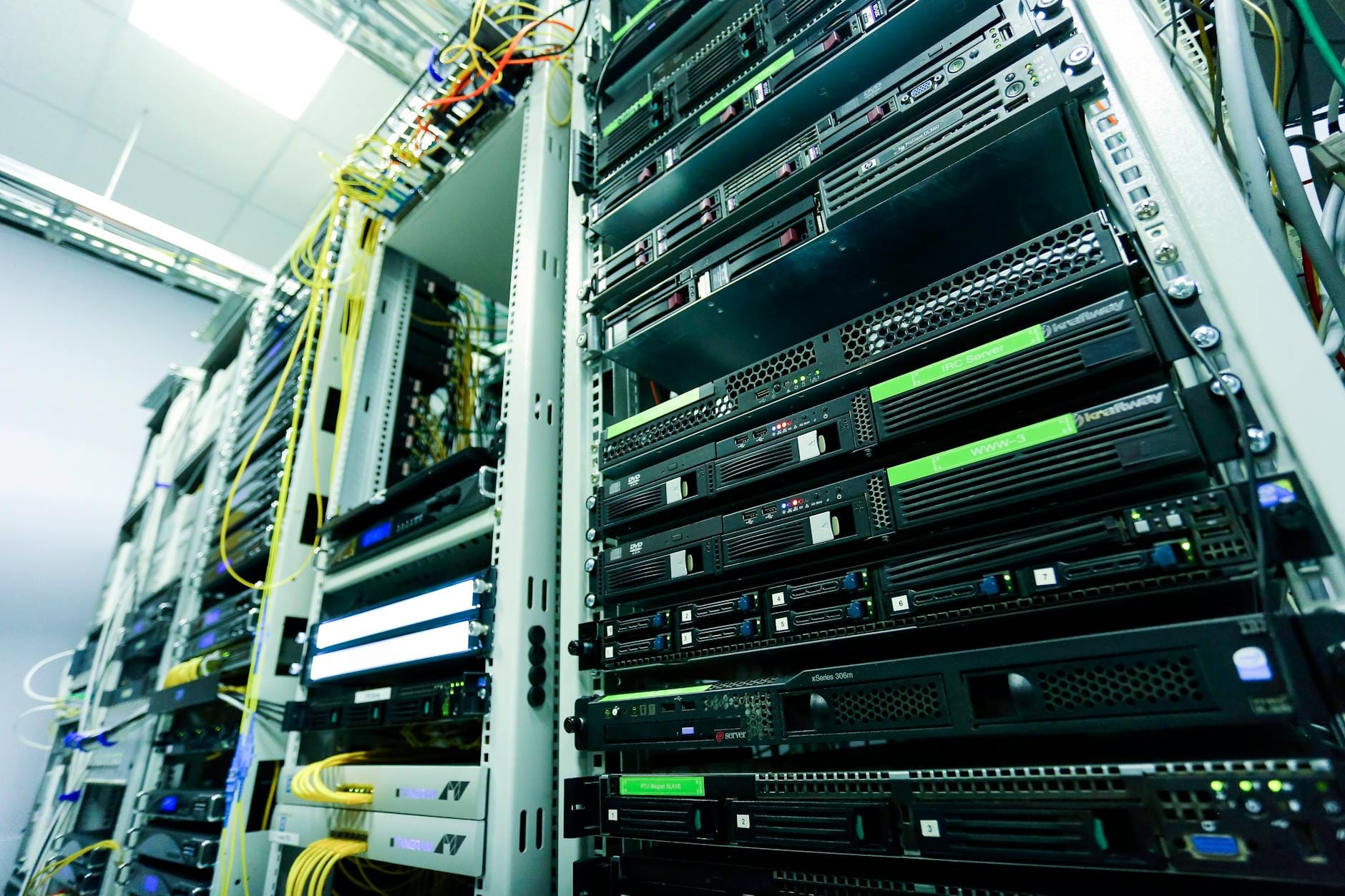
That pressure is prompting operators to redesign facilities rather than simply add more racks. Liquid cooling, rear-door heat exchangers and higher-density power distribution are moving from niche upgrades to standard features in new builds, especially where GPU clusters run hot around the clock. Colocation providers are marketing AI-ready halls that can handle far greater rack densities than legacy enterprise rooms.
Networking has become the next bottleneck. AI training jobs rely on massive east-west traffic inside clusters, which is pushing demand for 400-gigabit and 800-gigabit Ethernet, new optical interconnects and low-latency fabrics. Cisco, Arista, Nvidia and other infrastructure vendors are competing to become the default architecture for AI back ends, while cloud providers continue to balance proprietary stacks with more open Ethernet-based designs.
The shift is also changing competitive dynamics in cloud computing. Hyperscalers are racing to secure long-term GPU supply, reserve power at key campuses and launch managed AI services that keep enterprise customers inside their ecosystems. Smaller cloud and hosting providers are responding with specialized offerings, including sovereign cloud deployments, regional inferencing clusters and industry-specific AI environments.
Security teams are watching closely. Every new GPU cluster adds APIs, orchestration layers and software supply-chain dependencies that can be misconfigured or targeted. Identity controls, workload segmentation and zero-trust access are becoming more important as data moves between training pipelines, model registries and edge inference nodes. In parallel, firms handling sensitive data are under pressure to prove where models run, who can access them and how outputs are monitored.
What is changing in the technology stack
The fastest-moving innovation is happening below the application layer. Operators are adopting liquid cooling, intelligent power management and AI-driven network telemetry to keep dense environments stable, while chip designers are pushing higher-bandwidth interconnects and more efficient memory paths to reduce latency inside the rack.
Edge computing is also gaining ground. Telecom operators and enterprises are testing smaller AI sites closer to users for real-time analytics, customer service automation and industrial monitoring, reducing the need to send every workload back to a distant hyperscale region. That model could help ease cloud congestion, but it also spreads operational and security complexity across far more locations.
Some infrastructure teams are exploring blockchain-style provenance tools to track data lineage, model changes and audit trails across multi-cloud systems, although adoption remains early. The bigger trend is automation: AI is increasingly being used to optimize cooling, forecast power demand and detect network anomalies before they become outages.
What it means for the market
For enterprises, the message is clear: AI strategy is now a facilities strategy. Buying more software licenses will not be enough if power, cooling or network architecture cannot support the workload, which is why procurement, IT operations and finance teams are being pulled into the same planning cycle.
For network engineers and cloud architects, the challenge is building fabrics that can handle very high throughput without creating new latency or resilience problems. That includes closer attention to switch capacity, fiber design, routing policies and how AI traffic is isolated from business-critical production traffic.
For security professionals, the expanding AI stack creates a wider attack surface and more third-party dependencies. Model access controls, data governance, patch management and supply-chain validation are likely to be treated less as best practices and more as baseline requirements.
Investors should watch several pressure points at once: power costs, land acquisition, GPU availability, cloud margin compression and regional regulation. The winners are likely to be the vendors and operators that can deliver reliable AI capacity quickly without sacrificing efficiency or trust.
The next phase of the market will hinge on whether the industry can solve three problems at the same time: finding enough electricity, building faster networks and securing increasingly distributed AI environments. How well hyperscalers, telecom carriers and enterprise providers answer those questions will shape the infrastructure race through the rest of 2025.