


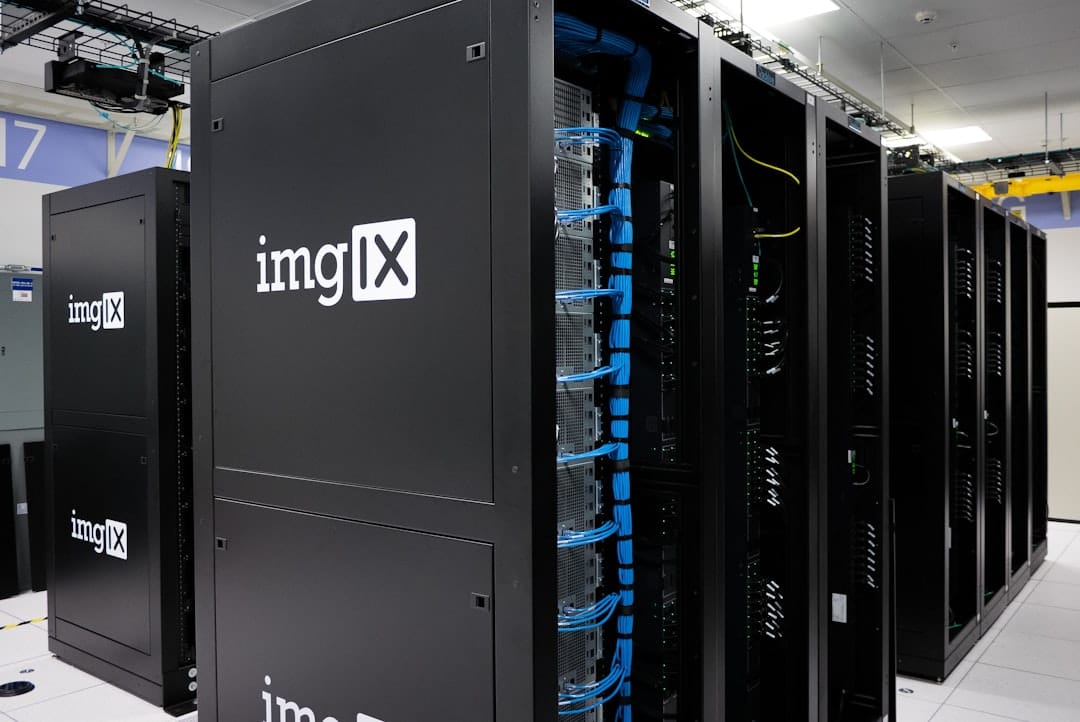
AI Data Centers Push Networks, Power and Security to the Forefront
Hyperscale cloud providers, colocation operators, chip vendors and enterprise IT teams are accelerating AI infrastructure buildouts this spring across the United States, Europe and Asia as demand for generative AI, real-time inference and high-performance computing strains data center power, cooling and networking capacity. The rush is not only about adding more servers; it is about redesigning the stack around denser racks, faster interconnects and tighter security controls because the bottlenecks have moved from compute to infrastructure.
Why AI infrastructure has become the new pressure point
For most of the past decade, cloud competition centered on software features, global reach and unit economics. That equation is changing as AI workloads demand far more electricity per rack, more bandwidth between servers and stricter latency targets than traditional enterprise applications.
The International Energy Agency has warned that data centers, AI and cryptocurrency-related computing could sharply increase electricity demand over the coming years, while the Uptime Institute has repeatedly identified power availability, cooling and operational resilience as top constraints for operators. In practical terms, that means the industry can no longer scale by adding standard white-space capacity alone.
This is also why power purchase agreements, utility interconnect queues and substation access are now strategic issues for cloud providers and enterprise buyers. A site that once looked attractive because it had cheap land and fiber access may now be unusable if it cannot support higher-density AI clusters or the cooling systems they require.
Hyperscalers, colocation firms and chip suppliers are adapting
Cloud majors are continuing to pour capital into AI-optimized regions and expanding availability zones, while colocation providers are pitching turnkey halls built for high-density racks and liquid cooling. The result is a more segmented market, with some facilities designed for conventional cloud workloads and others reserved for GPU-heavy training and inference.
Industry analysts say this split is reshaping pricing and lease structures. Operators can command premium terms for space that includes ready power, advanced cooling and network diversity, but they also face higher build costs and longer time to revenue.
Chip suppliers are part of the same story. Nvidia, AMD and networking vendors such as Arista and Cisco are all benefiting from the move toward faster switching, optical upgrades and purpose-built AI fabrics that can keep thousands of accelerators fed with data. Broadcom and other silicon firms are also competing to provide the back-end connectivity that makes large distributed clusters usable at scale.
For enterprises, the immediate implication is that AI adoption is increasingly tied to infrastructure planning. Organizations that want to train models or run inference at scale are finding that procurement now includes not only GPUs and cloud credits but also bandwidth, storage architecture and data governance.
Networking is moving into the critical path
The networking layer has become one of the most important differentiators in AI infrastructure. Traditional enterprise networks were built to move traffic in and out of applications, but AI clusters depend on constant east-west communication between accelerators, storage and control systems.
That is driving demand for 400G and 800G Ethernet, low-latency optical links and designs that reduce packet loss inside tightly packed clusters. Some operators are also using InfiniBand for specialized workloads, although Ethernet remains the dominant path for broader cloud deployment because it offers flexibility and scale.
Network engineers are also revisiting segmentation and observability. High-bandwidth AI environments can hide failures until they slow training jobs or increase inference latency, so telemetry, automation and traffic engineering are becoming operational priorities rather than afterthoughts.
The rise of distributed AI is also pushing some workloads closer to users. Telecom carriers and edge computing providers are exploring smaller inference nodes near metropolitan markets, factories and retail locations to reduce latency and lower backhaul costs. That shift matters because the same applications that once lived in a centralized cloud are now being redesigned for real-time response.
Security teams are being pulled deeper into the buildout
The expansion of AI infrastructure is creating a broader cybersecurity surface. New clusters bring new firmware, new management planes, new third-party dependencies and more opportunities for supply-chain compromise.
Security professionals are focusing on identity controls, hardware attestation, secure boot, privileged access management and stricter tenant isolation inside shared AI environments. They are also paying closer attention to model theft, prompt injection, data leakage and the risk that sensitive training data could be exposed through misconfigured cloud services.
This is especially important for regulated industries such as finance, healthcare and government, where data sovereignty rules can influence where models are trained and where inference occurs. In many cases, the security conversation is now tied directly to infrastructure location, not just software policy.
There is also a physical security dimension. As AI campuses become more valuable and more power-intensive, operators are hardening facilities, monitoring access more carefully and layering in redundant network paths to limit the impact of outages or attacks.
Liquid cooling, modular builds and edge inference are shaping the next phase
One of the clearest trends is the shift toward liquid cooling. Direct-to-chip cooling and rear-door heat exchangers are moving from niche solutions to mainstream planning tools because air cooling alone struggles to handle the heat density of modern GPU racks.
Modular data center designs are also gaining ground. Rather than waiting years for a traditional campus to finish construction, some providers are deploying prefabricated blocks that can be brought online faster and expanded in phases. That approach helps reduce risk, especially when utility capacity and permitting remain uncertain.
On the software side, automation is becoming central to AI operations. Teams are using orchestration tools to allocate resources dynamically, manage energy use and route workloads to the most efficient available site. The same logic is driving interest in AI-assisted infrastructure management, where operators use machine learning to predict failures, balance load and improve utilization.
Crypto and blockchain operators are watching these changes closely as well. Although the market has shifted from the speculative buildout of earlier cycles, high-density compute environments, distributed validation systems and edge-friendly architectures continue to borrow from the same power, cooling and networking innovations now being developed for AI.
What this means for enterprises, investors and the broader market
For enterprises, the message is straightforward: AI strategy now depends on infrastructure strategy. Companies that delay network upgrades, ignore data governance or underestimate power requirements may find that model projects stall before they reach production.
For IT teams, the workload is becoming more multidisciplinary. Infrastructure, security, networking, cloud and application groups need to coordinate earlier in the process because performance, compliance and resilience are now linked from day one.
For investors, the opportunity is concentrated in the picks-and-shovels layer: power equipment, cooling systems, optical networking, semiconductors, colocation real estate and cloud services built for AI. The risk is that capital spending could outrun utility access, supply-chain availability or enterprise demand if deployment plans are too aggressive.
For cloud providers and network engineers, the next phase will hinge on execution. The winners are likely to be the operators that can secure power, shorten build timelines, reduce latency and protect workloads without sacrificing flexibility.
What to watch next is whether the current AI expansion turns into a more durable infrastructure cycle or runs into constraints from grid capacity, transformer shortages, permitting delays and cyber risk. The companies that solve those problems first will shape the next generation of cloud computing, telecom edge services and AI infrastructure worldwide.