


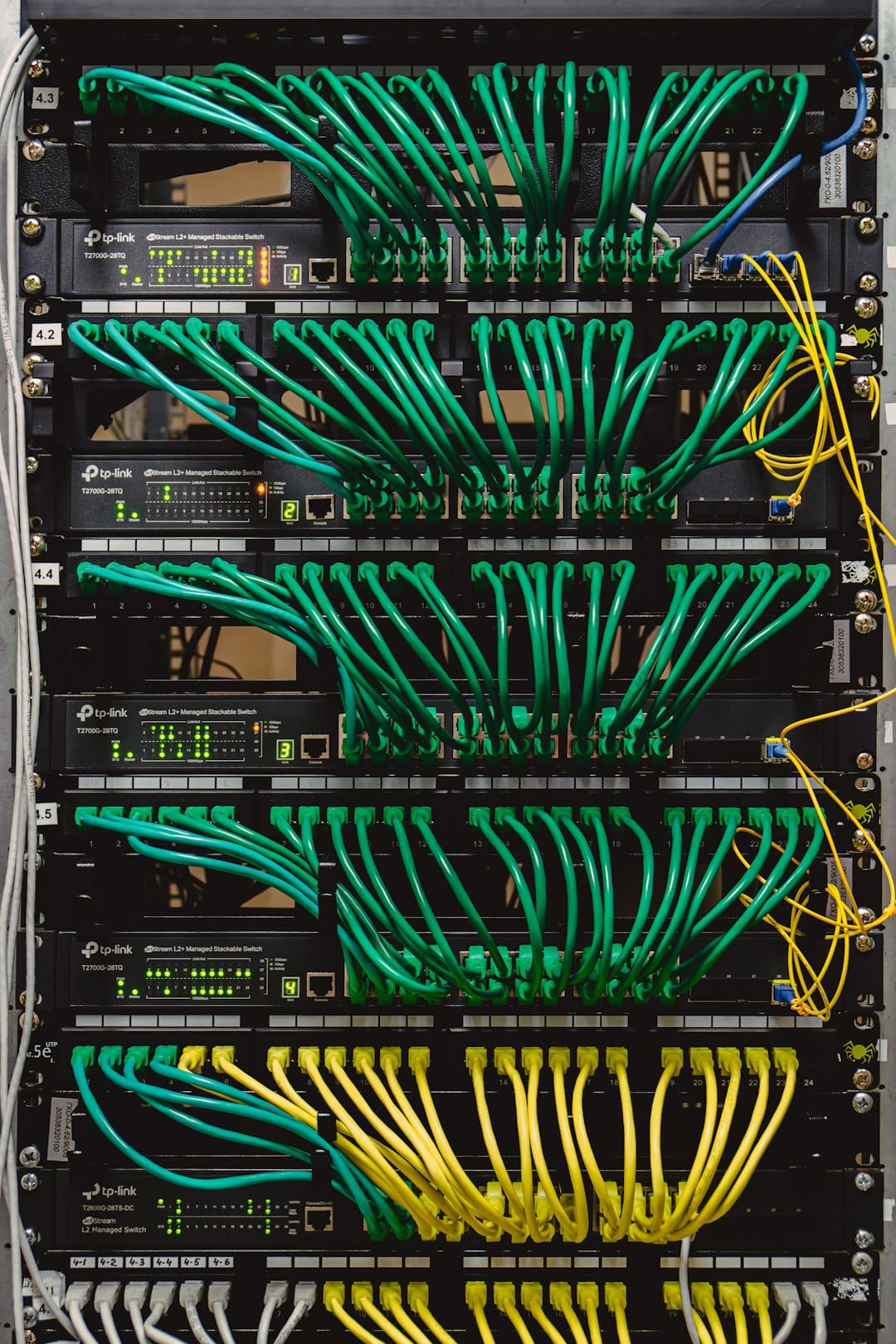
AI Infrastructure Boom Reshapes Data Centers, Networks and Security
Cloud providers, enterprise IT teams and telecom operators are expanding AI infrastructure across North America, Europe and Asia this year as demand for generative AI moves from pilot projects to production workloads. The surge is driving fresh spending on data centers, networking equipment and cybersecurity controls because traditional server rooms were not built for dense GPU clusters, high-speed interconnects and always-on inference traffic.
Why the buildout matters now
The shift began as a race to train large language models, but it now extends to inference, retrieval systems and private AI assistants that need low latency and steady power. Industry watchers say the bottleneck is no longer only compute; it is also electricity, cooling, fiber and the supply chain for switches, optics and transformers.
Uptime Institute has repeatedly flagged power and cooling as leading causes of data center risk, while analysts at Dell’Oro Group have pointed to AI-driven Ethernet and optical demand as a major growth engine. Gartner and other research firms have also argued that infrastructure budgets are being reorganized around AI, not just traditional enterprise refresh cycles.
Data centers, networks and power are now linked
Hyperscalers are adding capacity wherever power and permits allow, and colocation providers are racing to capture the spillover demand. That has sharpened competition for land, electrical gear and skilled engineers, especially in markets where grid access is tight and construction timelines are already long.
Enterprise buyers are responding with hybrid strategies: renting GPU capacity from cloud providers, colocating AI clusters or modernizing on-premises facilities with 400G and 800G Ethernet, denser fiber and automated orchestration. The result is a broader market for networking infrastructure, storage acceleration and distributed cloud services that can move data closer to users.
The networking layer is becoming a strategic battleground. Nvidia’s InfiniBand ecosystem still matters for large training environments, but Ethernet vendors are pushing AI-optimized switches, lossless transport and software tools that can manage east-west traffic more efficiently. Arista, Cisco, Broadcom and other suppliers are competing not just on port speed, but on how well their systems can handle scale, congestion and operational simplicity.
The market impact is extending beyond servers. Lead times for electrical components, optical modules and cooling systems remain a constraint, and that has encouraged operators to sign longer contracts, diversify suppliers and redesign facilities around higher rack densities. For some buyers, the cost of delaying a build is now greater than the premium of moving early.
Security teams are seeing a wider attack surface
The AI infrastructure race is also changing cybersecurity priorities. More APIs, more identity providers, more third-party GPU access and more edge nodes create new opportunities for credential theft, misconfiguration and supply-chain compromise. In many environments, the fastest route into an AI stack is not the model itself but an exposed management plane or weakly segmented network.
Security professionals are responding by tightening identity controls, isolating training and inference networks, and improving logging across cloud and on-premises systems. That matters because AI workloads are increasingly spread across multiple clouds, regional colocation sites and edge deployments, which makes visibility harder and response times more critical.
Downtime risk remains a physical issue as well. Uptime Institute’s outage surveys have consistently shown that power and cooling problems are among the most common data center failures, a reminder that resilience is still a mechanical as much as a digital challenge. As rack power rises, so does the need for better monitoring, backup planning and maintenance discipline.
Innovation is moving toward efficiency and automation
The next phase of the market is focused on efficiency. Direct-to-chip liquid cooling, rear-door heat exchangers and rack designs built for kilowatts rather than hundreds of watts are moving from pilot projects to mainstream specification. These systems are becoming more attractive as GPU density rises and operators look for ways to reduce energy waste and heat stress.
Network automation is evolving alongside the hardware. Software-defined networking, intent-based operations and AI-assisted telemetry are being used to shift workloads between sites, balance congestion and improve fault detection. In large environments, the ability to automate routine changes is quickly becoming a competitive advantage.
The same pattern is reaching telecom and edge computing. Private 5G networks, local inference appliances and edge cloud nodes are bringing AI closer to factories, hospitals, stores and logistics hubs where latency matters more than raw scale. For blockchain and crypto infrastructure operators, similar design priorities are emerging around validator nodes, custody systems and settlement layers that need low-latency links, strong key management and resilient power.
That convergence suggests a broader infrastructure story: the lines between cloud, telecom, enterprise and digital asset systems are blurring as each sector borrows from the others. AI is acting as the catalyst, but the operational lessons are spreading across the wider technology stack.
What it means for enterprises and the broader market
For enterprises, the message is clear: AI strategy is now an infrastructure strategy. IT teams need to map power, cooling, storage and network capacity before promising rollout dates, and they need to plan for ongoing operating costs rather than one-time purchase decisions.
For security professionals, the priority is stronger identity governance, segmentation and auditability across hybrid environments. For investors, the question is whether current spending turns into durable demand for switches, optics, cooling systems, managed GPU services and secure cloud platforms, or whether the market cools after the initial surge.
Cloud providers and network engineers are under pressure to deliver more capacity without running into energy limits, supply bottlenecks or resilience failures. What to watch next is whether permitting delays, transformer shortages and liquid-cooling adoption shape the pace of deployment, and whether 800G and emerging 1.6T networking can keep up with the next wave of AI inference, edge computing and distributed enterprise workloads.