


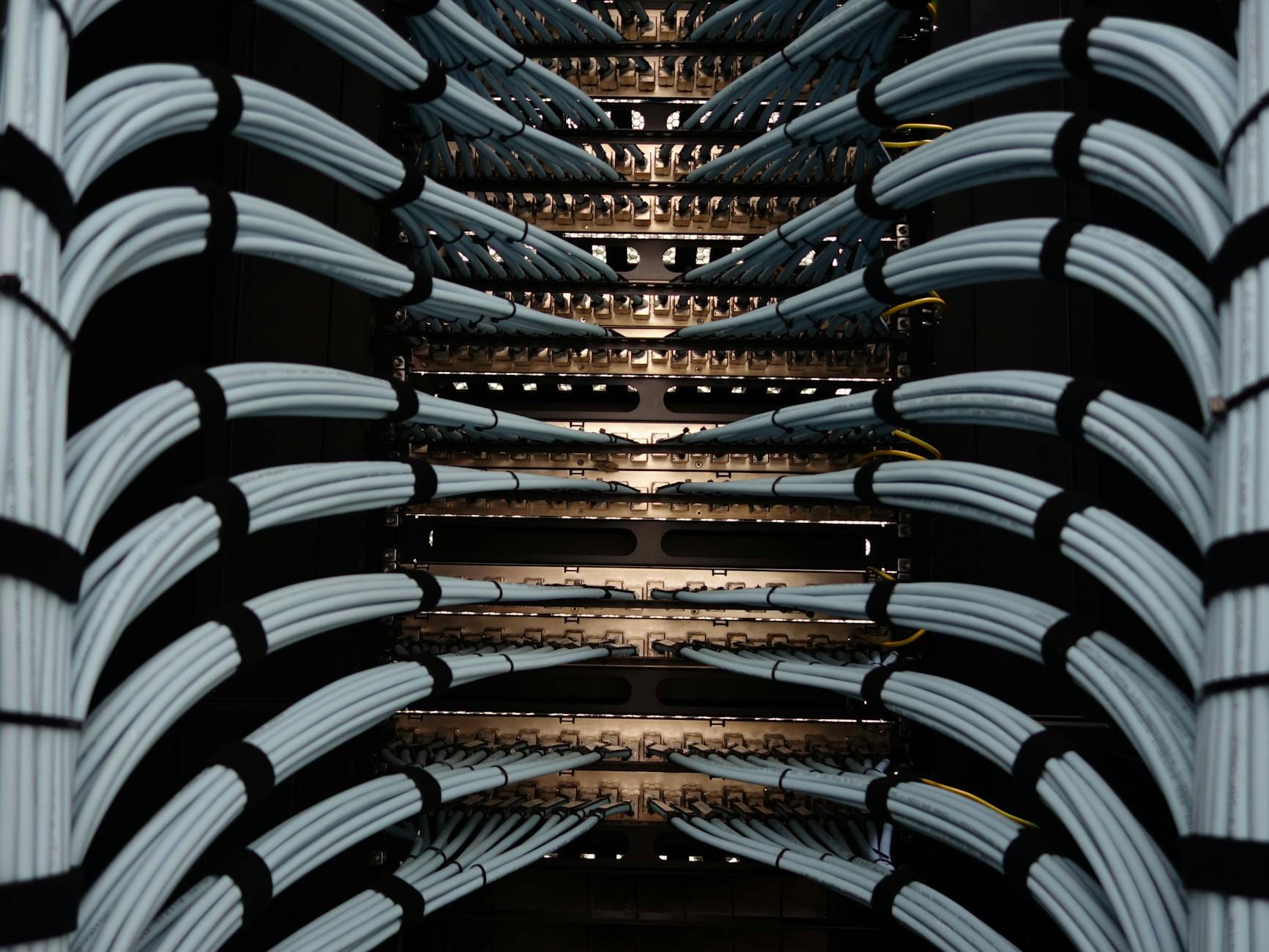
AI Infrastructure Push Reshapes Data Centers, Networks and Cloud Strategy
Enterprise buyers, cloud providers and data center operators are racing to expand AI-ready infrastructure this year as demand for large language models and real-time inference strains power, cooling and network capacity across major hubs in the United States, Europe and Asia. The shift is forcing a fresh round of investment in high-density racks, faster interconnects and stronger cybersecurity controls because the bottleneck is no longer just compute; it is the entire stack that supports it.
Why the market is moving now
The current wave of spending follows years of cloud growth, but AI workloads have changed the economics of infrastructure planning. Traditional enterprise facilities were designed for general-purpose servers, while modern AI clusters require far more electricity, tighter thermal management and low-latency networking that can handle huge amounts of data moving between GPUs.
That pressure is showing up in industry reports and earnings commentary across the sector. Uptime Institute has repeatedly flagged power and cooling as persistent constraints, while cloud capex trends tracked by firms such as Synergy Research Group point to continued expansion among hyperscalers even as companies scrutinize every dollar spent. The result is a market where capacity, not just price, is becoming the deciding factor.
Data centers are being redesigned for density
Operators are increasingly building around liquid cooling, rear-door heat exchangers and more sophisticated airflow management as rack densities climb. These upgrades are no longer niche experiments; they are moving into mainstream procurement as AI training clusters and inference platforms push conventional air-cooled environments to their limits.
At the same time, site selection is becoming more strategic. Data center developers are paying closer attention to grid availability, substation access and local permitting, especially in regions where power has become the scarcest resource. In practical terms, a site with available land but weak utility capacity may be less valuable than a smaller location with strong power commitments and fiber access.
Networking infrastructure is becoming a competitive edge
AI systems depend on fast, reliable east-west traffic inside the data center, which is driving upgrades to 400G and 800G Ethernet, InfiniBand fabrics and smarter switching architectures. The networking layer is no longer a back-end utility; for many buyers, it is a performance differentiator that can affect training time, inference latency and overall utilization.
That has created opportunity for vendors across the stack, from switch makers and optical component suppliers to network observability and traffic management platforms. It has also intensified competition among cloud providers, which are promoting tightly integrated networking and accelerator offerings to keep customers inside their ecosystems.
For enterprises, the challenge is less about buying faster equipment and more about aligning network design with application behavior. Distributed training, hybrid cloud models and edge deployment all place different demands on bandwidth, routing and resilience, making one-size-fits-all architecture increasingly difficult to defend.
Security teams face a broader attack surface
The AI infrastructure boom is also expanding the cybersecurity problem. More exposed APIs, more third-party integrations and more automated orchestration tools create new opportunities for misconfiguration and abuse. Security leaders are responding with tighter identity controls, segmentation and zero trust principles, but the pace of deployment is often faster than the pace of governance.
There is also growing concern about supply chain risk. Data center hardware depends on a complex chain of chips, optics, power systems and firmware, while cloud environments now blend on-premises, colocation and managed services in ways that can make accountability harder to trace. That complexity increases the value of continuous monitoring, asset visibility and firmware integrity checks.
Analysts have warned for months that AI adoption is arriving before many organizations have mature operational controls in place. In practice, that means security teams are being pulled into infrastructure planning earlier, rather than after systems go live, a sign that risk management is becoming part of the build process instead of a separate review step.
Cloud and chip makers are shaping the next phase
Hyperscalers remain central to the story because they control much of the demand for accelerators, networking gear and colocation capacity. Their investment decisions influence almost every other layer of the market, from GPU suppliers and server builders to power utilities and fiber providers.
At the same time, chipmakers and infrastructure vendors are pushing more specialized hardware to support model training and inference at scale. That includes more efficient accelerators, higher-bandwidth interconnects and management software that can squeeze more performance out of every watt. The competitive race is increasingly about system-level efficiency rather than raw silicon alone.
Innovation and trend angle: the rise of AI-native infrastructure
The clearest trend is the move toward AI-native infrastructure, where data centers, networks and cloud platforms are designed from the start for machine learning workloads rather than adapted later. That includes automated workload placement, predictive cooling, AI-assisted network management and stronger telemetry to spot congestion or failure before it affects production.
This evolution could reshape how enterprises buy and operate infrastructure. Instead of choosing between cloud and on-premises on cost alone, they may begin to evaluate platforms based on density, locality, latency and carbon efficiency, especially as regulators and shareholders pay closer attention to energy consumption.
The same trend is influencing edge computing and telecom. As more AI inference moves closer to users, network operators are exploring smaller distributed facilities, private 5G deployments and edge nodes that can process data in real time without sending everything back to a central cloud region.
What it means for enterprises and investors
For enterprises, the immediate message is that AI planning now requires a broader infrastructure strategy. IT teams need to account for power availability, bandwidth, thermal constraints, security architecture and vendor lock-in at the same time, rather than treating them as separate projects.
For investors, the opportunity is spread across the full ecosystem: colocation, optical networking, power systems, cooling technology, cybersecurity and cloud software. The risk is that demand can outpace buildout capacity, especially if permitting delays, utility constraints or component shortages slow deployment.
For network engineers and security professionals, the next year will likely bring more pressure to standardize telemetry, automate policy enforcement and design for failure across geographically distributed environments. What to watch next is whether the industry can scale AI infrastructure quickly enough without creating new bottlenecks in energy, connectivity and cyber defense.