


Private Cloud Is Quietly Rebuilding Around KVM, Proxmox, and Denser Hardware
Enterprise infrastructure teams are in the middle of a quiet reset. As virtualization licensing, hardware refresh pressure, and AI-driven density demands collide, many organizations are rethinking private cloud around KVM-based stacks, Proxmox, Hyper-V, and smaller but more capable clusters. The shift is happening now across colocation sites, regional datacenters, and on-prem environments because the old assumption that virtualization should be centralized, monolithic, and expensive no longer fits operational reality.
What is changing is not just software choice. It is the whole operating model: rack power budgets, cooling strategy, storage architecture, network design, and backup planning. Private cloud is becoming less about abstracted compute and more about building a platform that can survive cost pressure, density growth, and tighter resilience expectations.
Why this shift matters now
For years, enterprises accepted broad virtualization platforms as the default because they simplified management and standardized operations. That model is under strain. Teams now need more control over cost, more flexibility in hardware procurement, and a clearer path to modern workloads that may mix VMs, containers, and GPU-accelerated services in the same facility.
At the same time, operators are dealing with harder physical limits. Rack densities that were once comfortable at 5 to 10 kW are being pushed higher by modern servers, PCIe expansion, faster storage, and accelerator-ready nodes. That changes everything downstream, from power distribution to airflow containment and network fabric design.
The technical shape of the new private cloud
The emerging architecture is usually less like a giant shared pool and more like a set of purpose-built clusters. General-purpose VM nodes handle core enterprise applications. Separate storage clusters protect data locality and restore speed. Edge or branch sites keep latency-sensitive services close to users. In some environments, AI or analytics nodes sit in their own racks because they simply cannot be cooled or powered like legacy equipment.
| Layer | What is changing | Operational impact |
|---|---|---|
| Virtualization | KVM, Proxmox, Hyper-V, and mixed hypervisor estates | More control, more integration work |
| Storage | Ceph, NVMe tiers, object backups, faster replication | Better resilience, higher east-west traffic |
| Networking | Leaf-spine, 25/50/100GbE, tighter segmentation | Lower latency, more predictable failure domains |
| Cooling | Hot aisle containment, rear-door exchangers, liquid-ready racks | Higher density without thermal surprises |
Virtualization is becoming an infrastructure decision, not a habit
The practical conversation has moved beyond brand preference. Engineers are asking which platform best aligns with automation, backup, patching, cluster design, and recovery objectives. KVM-based platforms and Proxmox are attractive because they can fit into a more modular architecture and integrate well with open tooling. Hyper-V remains relevant where Microsoft workloads dominate. Large VMware estates are still deeply embedded, but many teams are now rationalizing footprints rather than expanding them by default.
That rationalization has consequences. It pushes organizations to document workloads more carefully, separate tiers by criticality, and validate live migration and recovery behavior instead of assuming the stack will handle it automatically. The upside is a cleaner platform. The downside is that transition work is real, and it touches every layer above the hypervisor.
Hardware density is forcing a cooling and power rethink
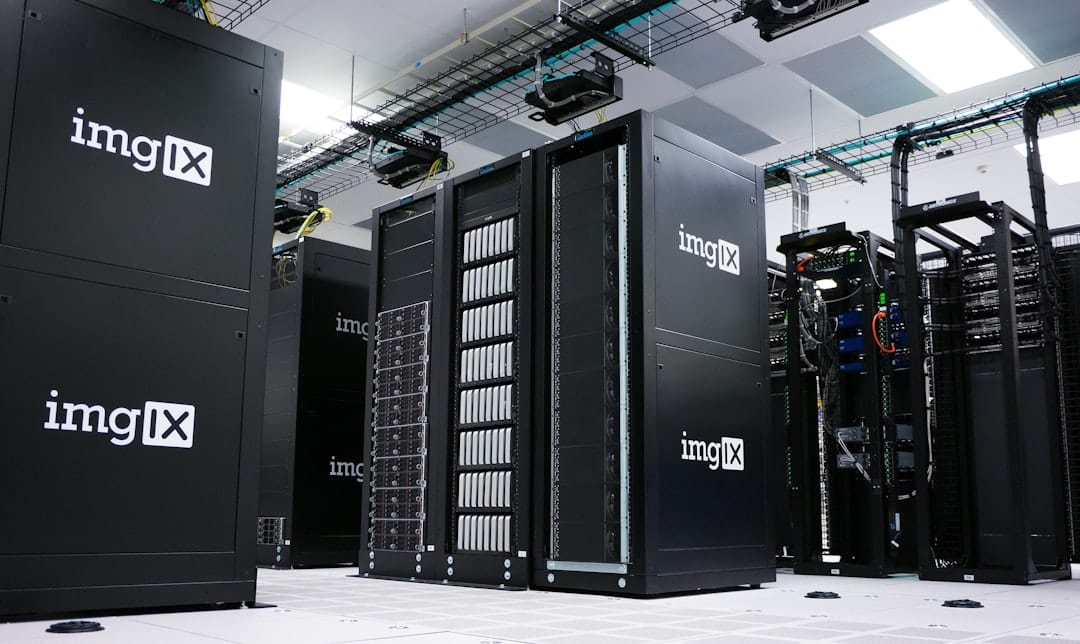
Modern private cloud refreshes are increasingly constrained by the facility, not the server catalog. Dense compute nodes can be easy to buy and hard to deploy if the room cannot support the heat load. This is why liquid cooling, rear-door heat exchangers, and better rack-level telemetry are moving from specialty topics into mainstream planning.
- Power capacity is being reserved earlier in the procurement cycle.
- Racks are being standardized around known thermal envelopes.
- Facilities teams are reading server telemetry as an operational signal, not an afterthought.
- Cooling design is being aligned with workload tiers instead of treating the room as homogeneous.
This matters because the next infrastructure bottleneck is often not CPU supply. It is the ability to operate dense systems safely for years without excessive fan noise, throttling, or emergency rework.
What this means for operators and enterprise teams
Datacenter operators and hosting providers will see more demand for flexible rack designs, better cross-connect planning, and higher-quality power monitoring. Cloud operators and internal platform teams will need tighter observability across compute, storage, and network layers because mixed estates are less forgiving than standardized ones.
For IT teams, the major benefit is control. Modern private cloud can be engineered around actual workload behavior rather than historical vendor defaults. That improves cost transparency, capacity forecasting, and disaster recovery planning. But it also demands stronger discipline around configuration management, patch windows, and test restores.
Operational lessons for the next refresh cycle
The teams that do this well are treating infrastructure as a lifecycle problem, not a one-time purchase. They are building for migration, not just deployment. They are testing restore speed, not just backup completion. They are modeling power at the rack level, not at the room level. And they are using automation to reduce variance across clusters, especially when multiple hypervisors or storage tiers coexist.
The real lesson is that private cloud is not fading; it is maturing. The winning designs over the next 6 to 18 months will probably be the ones that accept complexity where it helps and remove it where it hurts. That means leaner hypervisor choices, denser but better-cooled hardware, and a much more explicit connection between software architecture and physical infrastructure.
The organizations that adapt fastest will not necessarily have the biggest platforms. They will have the clearest operating model.