


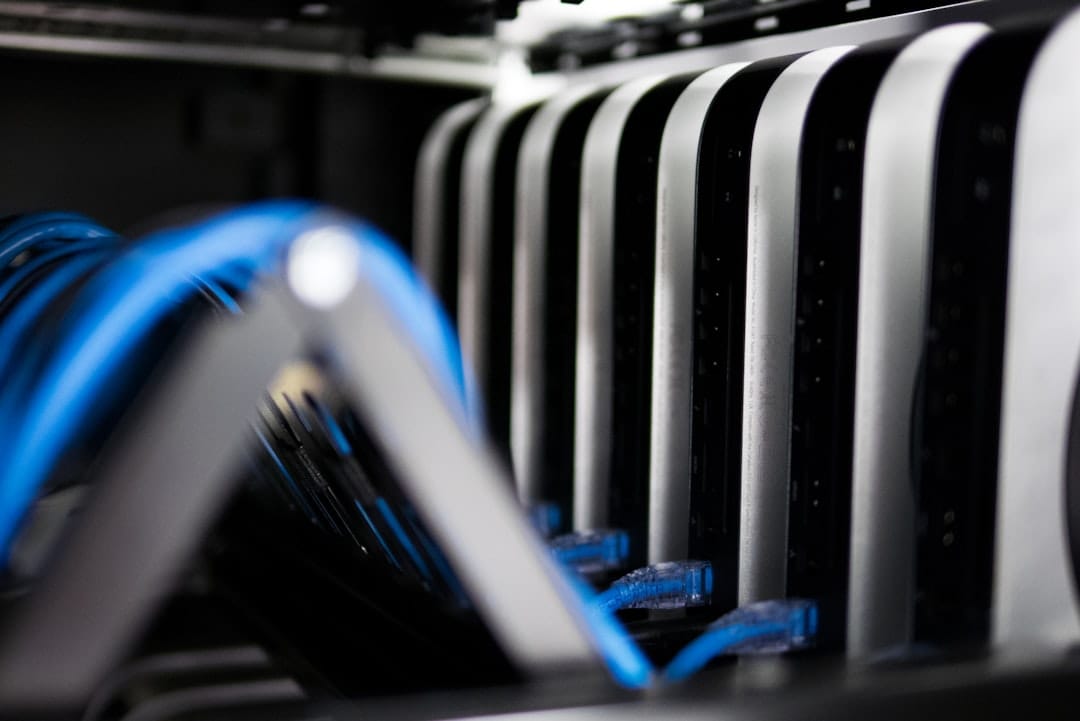
AI Infrastructure Boom Forces Data Centers to Rebuild the Stack
Data center operators, cloud providers, chip vendors, and enterprise IT teams are racing to expand and redesign infrastructure as AI workloads push power, cooling, networking, and cybersecurity requirements to new levels in 2025. Across North America, Europe, and parts of Asia, the rush to deploy generative AI and machine learning systems is driving a shift from conventional server rooms to high-density facilities built for accelerated computing, liquid cooling, and faster east-west traffic.
Why the AI buildout is changing infrastructure now
The immediate pressure comes from the size and intensity of modern AI models, which consume far more electricity and generate far more heat than traditional enterprise applications. That has turned data center capacity into a strategic constraint rather than a back-end utility, especially as hyperscalers and colocation providers compete to secure land, grid access, and long-term power contracts.
Industry research has been sounding the alarm for months. Uptime Institute has repeatedly warned that power and cooling are among the biggest barriers to scaling AI-ready facilities, while Deloitte and other analysts have pointed to a sharp rise in demand for high-density racks, liquid cooling systems, and GPU-optimized networking. The result is a broad reordering of priorities across the infrastructure stack.
From server rooms to AI factories
The most visible change is in the data center itself. Traditional air-cooled environments are struggling to support racks loaded with GPUs and AI accelerators, prompting operators to adopt direct-to-chip liquid cooling, rear-door heat exchangers, and other thermal management techniques designed for much higher wattage per rack.
That modernization is not limited to hardware. Facility design is also changing, with builders rethinking floor layouts, power distribution, backup systems, and monitoring tools to handle workloads that can spike unpredictably. In practice, AI infrastructure now resembles a tightly coordinated factory floor, where compute, power, and cooling must be planned together rather than treated as separate disciplines.
Networking has become just as important. Large-scale AI training and inference demand low-latency, high-bandwidth fabrics that can move massive volumes of data between compute nodes without bottlenecks. That is why vendors are pushing faster Ethernet, InfiniBand alternatives, and software-defined networking tools that can better support distributed AI clusters.
Cloud providers and enterprises are feeling the squeeze
For cloud providers, the AI boom is both an opportunity and a logistical challenge. They can command premium pricing for accelerated compute, but only if they can bring enough capacity online quickly enough to meet customer demand. Delays in power availability, permitting, and supply chain delivery have become a competitive risk.
Enterprises face a different set of trade-offs. Some are moving workloads to managed AI services from hyperscalers, while others are building private AI environments to keep data local and control costs. Either way, IT leaders are being forced to revisit long-term infrastructure road maps, especially where older facilities, legacy networking gear, or fragmented storage systems cannot support modern AI pipelines.
Analysts say the market is also being shaped by a supply crunch in GPUs, high-speed interconnects, and power equipment. That scarcity has helped accelerate partnerships between cloud companies, semiconductor vendors, and colocation firms, as each player tries to lock in access to the components needed to scale AI delivery.
Cybersecurity is moving closer to the core
As AI infrastructure expands, so does the attack surface. More distributed compute, more APIs, more third-party integrations, and more data movement across hybrid environments create fresh opportunities for intrusion, misconfiguration, and supply chain compromise. Security teams are now being asked to protect not just applications and identities, but the infrastructure layers that support model training and inference.
That includes hardening remote management tools, segmenting traffic in high-speed fabrics, and strengthening controls around sensitive datasets used to train models. In many environments, security leaders are also working more closely with infrastructure teams to ensure that logging, anomaly detection, and access control scale with the AI estate.
The rise of AI assistants and automated operations is adding another layer of complexity. While automation can improve incident response and optimize performance, it can also create new failure modes if models are misconfigured or trusted too heavily. Security vendors are responding with tools that combine observability, identity protection, and AI-specific risk detection.
The new infrastructure trend: efficiency, automation, and edge deployment
The next phase of the market is likely to focus on efficiency as much as expansion. Power-constrained regions are already pushing operators toward more efficient chips, better workload placement, and software that can schedule AI jobs based on energy availability and cooling capacity. This will favor facilities that can combine dense compute with smart orchestration.
Automation is also becoming central to infrastructure operations. Data center operators are investing in predictive maintenance, AI-assisted monitoring, and digital twins to anticipate equipment stress before it turns into downtime. At the network layer, operators are using telemetry and policy automation to keep performance stable as AI clusters grow more complex.
Edge computing is another area to watch. As enterprises deploy more AI inference closer to users, factories, stores, hospitals, and telecom sites may host smaller but highly optimized nodes that reduce latency and bandwidth costs. That shift could create demand for compact, secure, remotely managed edge systems tied into larger cloud and data center ecosystems.
What it means for the market
For enterprises, the message is clear: AI strategy is now an infrastructure strategy. Companies that want to deploy generative AI at scale will need to budget for power, cooling, networking, storage, and cybersecurity together, not as separate line items.
For IT teams and network engineers, the near-term challenge is operational. They must support higher-density environments, redesign traffic flows, and keep uptime stable while hardware footprints and software demands change quickly. For security professionals, the priority is protecting a broader and more dynamic environment that stretches from cloud regions to edge sites.
Investors are watching whether the current buildout translates into durable demand for cloud services, semiconductor capacity, optical networking, and liquid cooling equipment. At the same time, valuations in the infrastructure ecosystem may depend on how quickly supply constraints ease and how efficiently operators can monetize AI capacity.
The broader technology market is heading toward a more tightly integrated stack, where chips, cooling, power, networking, security, and software orchestration are increasingly designed together. What to watch next is whether the industry can scale this new AI infrastructure model without running into persistent power shortages, cost overruns, or security incidents that slow the pace of deployment.