


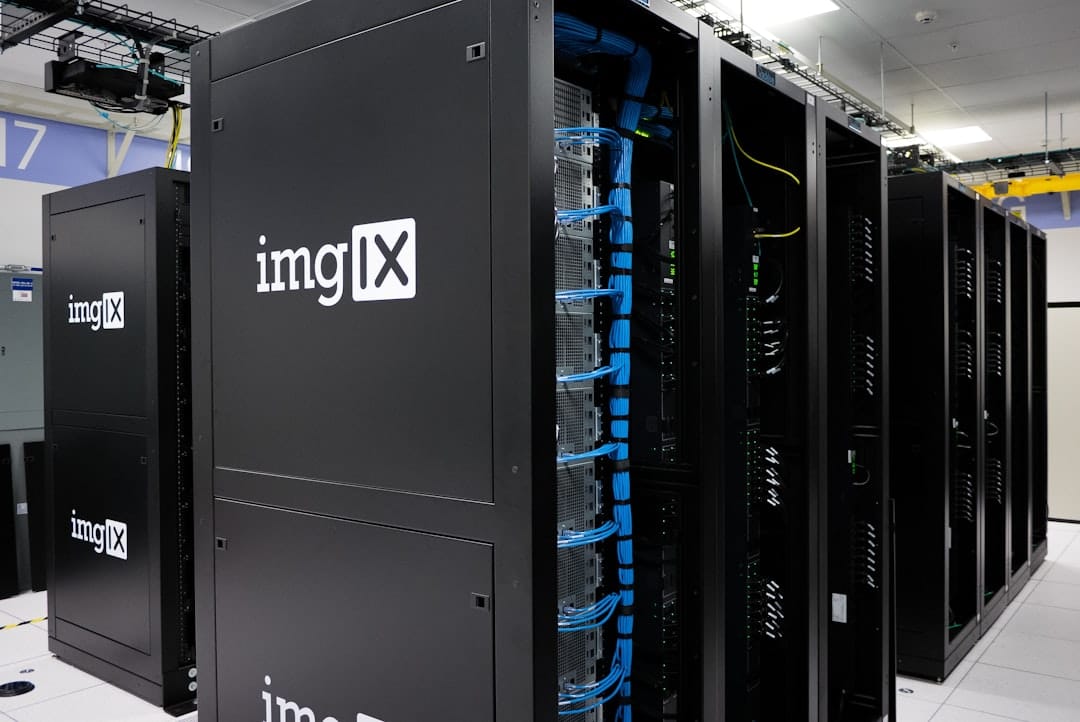
AI Infrastructure Boom Rewrites the Data Center Playbook
Cloud providers, enterprise IT teams and data center operators are accelerating a major infrastructure upgrade as AI workloads push demand for faster networking, denser compute and stronger security controls across North America, Europe and Asia. The shift, visible throughout 2024 and now shaping procurement plans for the next several years, is being driven by the rapid adoption of generative AI, tight GPU supply, and the need to move and protect far more data between servers, storage systems and users.
Why the market is moving now
The old model of building data centers around virtualization and storage is giving way to facilities designed for high-power accelerators, liquid cooling and low-latency connectivity. That change matters because AI training and inference do not just consume more compute; they also create intense east-west traffic inside the data center, where servers talk to one another at very high speeds.
Industry watchers say the result is a wholesale redesign of infrastructure priorities. The International Energy Agency has warned that data center electricity demand could rise sharply as AI use expands, while analysts at firms such as Dell’Oro Group and Synergy Research Group have pointed to sustained spending on servers, switches and cloud capacity as a sign that the AI buildout is still early.
Data centers, networking and power are now tied together
For operators, the bottleneck is no longer simply rack space. Power availability, cooling efficiency and network fabric performance have become equally important, especially as GPU clusters draw far more electricity per rack than traditional enterprise hardware.
That has pushed liquid cooling from niche deployment to mainstream planning, particularly in new builds and retrofits aimed at AI training. At the same time, vendors are racing to ship higher-speed Ethernet and InfiniBand systems that can keep thousands of chips synchronized without creating congestion or latency spikes.
Hyperscale cloud providers are also rethinking facility design. Instead of treating the data center as a general-purpose utility, they are segmenting capacity by workload, with AI pods, storage tiers and network paths engineered for very specific performance targets.
Competitive pressure is spreading across the stack
The AI infrastructure race is reshaping competition among server makers, switch vendors, chip designers and cloud platforms. Nvidia remains a central force because its GPUs sit at the heart of many AI deployments, but the broader market is also benefiting networking companies, optical component suppliers and cooling specialists.
Enterprises are not standing still. Many are blending public cloud, private cloud and colocation capacity to reduce dependence on a single provider and to keep sensitive data closer to home. That hybrid approach has created new demand for interconnects, private links and software that can manage workloads consistently across different environments.
Some organizations are also testing custom silicon and smaller model architectures to lower costs. Those efforts reflect a common concern across the market: AI infrastructure is expensive to buy, expensive to power and expensive to operate, so efficiency is now a board-level issue as much as a technical one.
Security teams are being pulled deeper into infrastructure planning
The AI buildout is not only a performance story. Security teams are increasingly involved because large-scale model training expands the attack surface, introduces new data governance risks and creates more valuable targets for ransomware and espionage.
Zero trust segmentation, workload identity and stronger encryption are becoming more important inside the data center, not just at the network edge. Security researchers have also warned that model theft, poisoned training data and exposed APIs can undermine AI systems even when the underlying infrastructure is well defended.
For cloud and enterprise leaders, this means security can no longer be bolted on after capacity is purchased. It has to be built into the design of the AI platform, from access control and logging to backup strategy and incident response.
Edge computing and telecom are joining the shift
The AI infrastructure wave is also spilling into telecom and edge computing. As companies deploy smaller models closer to factories, retail sites, hospitals and network hubs, they need more compact infrastructure that can process data locally and send only the most useful information back to the cloud.
That is creating new opportunities for carriers, colocation providers and edge specialists, particularly in markets where latency or data sovereignty matters. It is also encouraging more investment in optical transport, private 5G and automated network management so traffic can move reliably between edge sites and core cloud regions.
In parallel, some blockchain and crypto infrastructure operators are watching the same trends closely. Their businesses depend on efficient compute, resilient networking and low-cost energy, which makes them sensitive to the same power and cooling constraints now reshaping AI deployments.
What the trend means for enterprise technology
For enterprises, the immediate implication is straightforward: AI adoption now requires a full-stack infrastructure strategy, not just access to a large language model. IT teams must plan for power, rack density, bandwidth, governance and resiliency at the same time.
For investors, the opportunity is broadening beyond chips to include switches, optical gear, cooling systems, software-defined networking and cyber tools that can secure AI pipelines. The market is likely to reward vendors that help customers scale without driving up costs or complexity too quickly.
For network engineers and cloud providers, the next phase will hinge on how well they can balance performance with efficiency. The firms that master high-density compute, automated operations and stronger segmentation will be better positioned as AI moves from pilot projects to production workloads.
What to watch next is whether power shortages, supply-chain constraints and security incidents slow deployment, or whether new cooling methods, faster network standards and more efficient AI architectures make the next wave of infrastructure expansion easier to sustain.
Frequently Asked Questions
Why are AI data centers being redesigned instead of just expanded like traditional cloud facilities?
AI workloads stress the infrastructure in a different way than virtualization-heavy environments. They need much denser compute, far more east-west traffic between servers, and tighter coordination between power, cooling and networking. That is why operators are redesigning facilities around GPU clusters, low-latency fabrics and liquid cooling rather than simply adding more racks.
Why has liquid cooling moved from a niche option to a mainstream requirement?
GPU-heavy AI clusters can generate far more heat per rack than conventional enterprise hardware, making air cooling less efficient and sometimes insufficient. Liquid cooling helps operators remove heat more directly, improve power efficiency and support higher rack densities. It is becoming especially important in new builds and retrofits designed for AI training and inference.
If cloud providers already have large data centers, why are they segmenting capacity into AI pods and specialized zones?
AI systems have very different performance needs from general-purpose cloud services. By separating AI pods, storage tiers and network paths, providers can reduce congestion, improve latency and tune each part of the facility for a specific workload. This also helps them allocate scarce GPU capacity more efficiently and avoid performance bottlenecks.
Why does networking matter so much for AI if the main constraint is GPU availability?
GPUs are critical, but they only deliver full value if data can move quickly between chips, storage and users. AI training often creates heavy east-west traffic inside the data center, so high-speed Ethernet and InfiniBand are needed to keep thousands of processors synchronized. Without fast networking, expensive GPUs sit idle waiting for data.
What new security risks does AI infrastructure create beyond ordinary data center threats?
AI infrastructure increases both the value and exposure of data. Large training runs can be targeted through model theft, poisoned data, or exposed APIs, while distributed workloads can widen the attack surface. That is why zero trust segmentation, workload identity and stronger encryption are becoming central to infrastructure planning, not just security add-ons.
Why are some enterprises using hybrid cloud and colocation instead of relying on one big public cloud provider?
AI can be expensive to run, and different workloads have different requirements for cost, control and data locality. A hybrid approach lets enterprises keep sensitive data closer to home, use public cloud for scale, and rely on colocation or private links for predictable performance. It also reduces dependence on a single vendor.

